
Wood fences
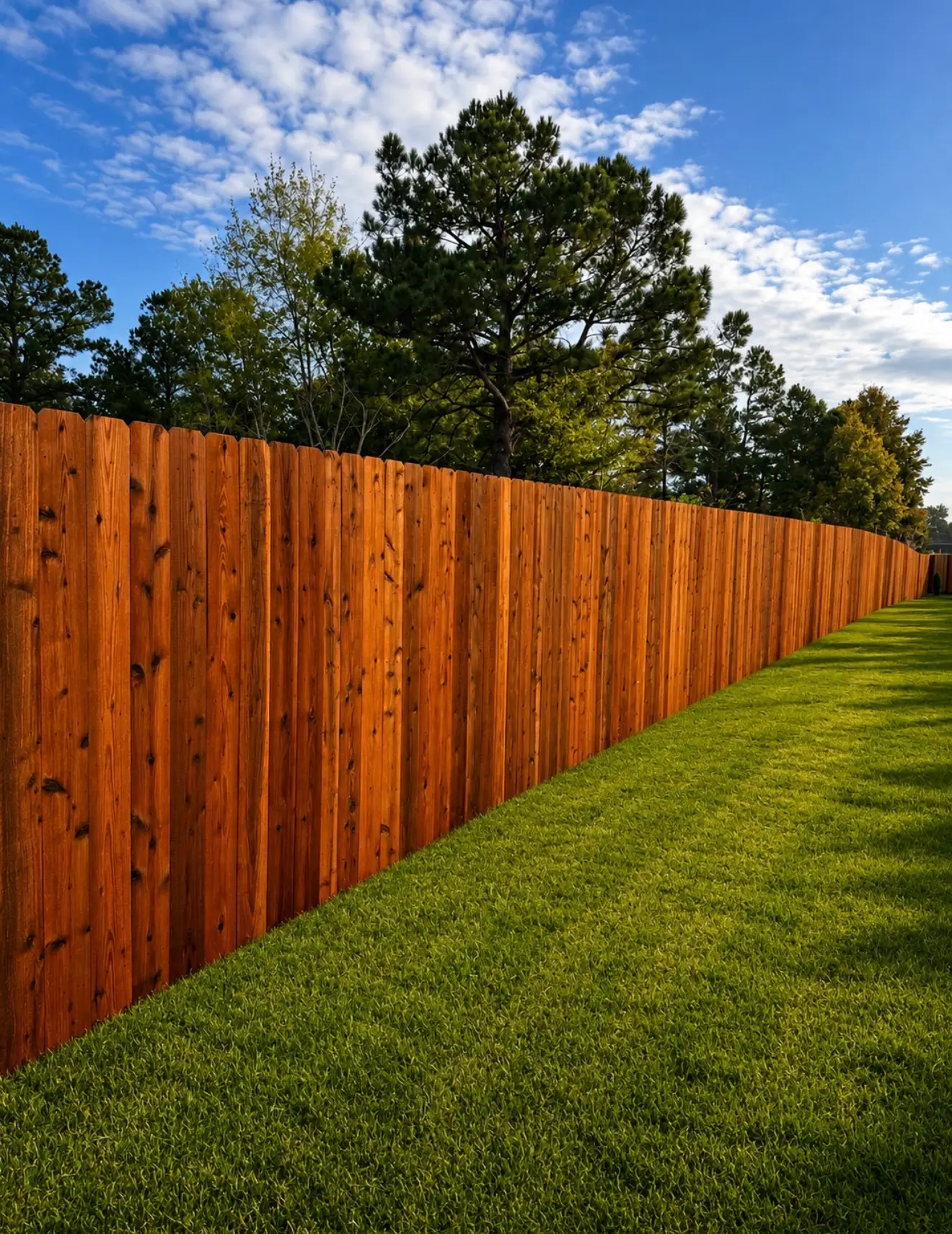
Pre-stained wood fences
We stain the boards before they go in the ground — all four sides, including the back and the cut ends nobody can reach once the fence is built. It is the difference between a fence that is sealed and a fence that merely looks stained from the patio.
Cedar & treated pine • Steel posts driven about 40 inches • 2-year no-questions-asked workmanship warranty
Why we stain before we build
Every face gets coated, including the ones you can never reach
Boards are stained before they go up, so the back, the edges and the ends are sealed too. Stain a fence after it is built and you are only coating the two faces a sprayer can reach — the cut ends and the board edges sitting against the rail stay bare, and that is exactly where moisture gets in first.
No waiting on the weather
Staining in place needs a dry fence and a dry forecast. In the Mid-South that window is genuinely hard to catch between spring rain and July humidity, and a lot of fences never get stained at all because the right weekend never arrives.
No overspray on your siding, patio or plants
Spraying a finished fence in a tight yard means masking the house, the deck and the beds. Pre-staining removes that problem entirely.
The color is even
A factory-consistent application does not leave the lap marks, runs and thin patches you get spraying a vertical wall of boards in a hurry.
What to expect over time
It is protection, not permanence
Any stain on any wood fence fades. Sun on the south and west faces takes the color first, and how long the finish holds depends on exposure, the color you chose and how much weather that run takes. Pre-stained wood starts better protected than site-stained wood, but nothing about wood is maintenance-free.
Wet lumber cannot be sealed
Green or wet boards have to dry before finish will hold. That is the honest reason a new fence sometimes should not be stained on day one — and it is the reason pre-stained material is worth choosing, because that drying has already happened.
Cedar and pine take it differently
Cedar's tight grain holds stain evenly and keeps a rich tone longer. Treated pine takes stain well once it is dry and is the budget-friendly route. We will show you both before you decide.
We do not refinish existing fences
We install new fences, including pre-stained ones. Restaining a fence somebody else built years ago is not something we take on, so we will tell you that up front rather than waste your time.
Common questions
What does pre-stained mean?
The boards are stained before they are installed, so all four sides — face, back, edges and ends — carry finish. It is the opposite of the usual approach, where a fence is built raw and then sprayed on two faces afterwards.
Is a pre-stained fence better than staining it later?
For coverage, clearly yes: the back, the edges and the cut ends get sealed, and those are the surfaces that fail first on a wood fence. It also removes the weather window and the overspray problem. What it cannot do is make the fence maintenance-free.
Do you stain or refinish an existing fence?
No. We install new fences and offer them pre-stained. We do not take on refinishing work on fences already in the ground, so if that is what you need we will say so instead of stringing you along.
How long does the stain last in Memphis humidity?
Longer than an unsealed fence and longer than a fence sprayed on two faces, but it will still fade — sun exposure is what decides the pace, so the west-facing run always goes first. Plan on re-coating the exposed faces down the road as ordinary upkeep rather than as a failure.
Does pre-staining cost more?
It is priced as part of the fence rather than as a separate service. Run your yard through our estimator or call 662-806-7800 and we will lay out stained versus unstained on the same quote so you can see the difference.
Should I choose cedar or pine if I want it stained?
Cedar holds stain more evenly and keeps its tone longer; treated pine is the value option and performs well once sealed. Our cedar versus pine comparison walks through cost, lifespan and how each ages here.